Prisoner's Dilemma
Iterated Prisoner's Dilemma with truly simultaneous, synchronous moves.
The iterated Prisoner's Dilemma with genuinely simultaneous moves. Players are paired by a mutual opponent reference and act each round under a strategy — tit-for-tat, always-cooperate, always-defect or random. Because the update is synchronous, every player's move is computed against a frozen snapshot of the previous round, so one player's choice cannot leak into the other's decision within the same round. Payoffs accumulate under the canonical ordering T > R > P > S.
A precise demonstration of synchronous update semantics, where simultaneity is a correctness property rather than an approximation. The strategy mix and resulting score trajectories are reproducible from the event log, making it a clean substrate for studying cooperation dynamics.
A live sample of the dataset this scenario generates.
Linked tables with guaranteed referential integrity.
Generated REST endpoints. Also exposed as MCP tools.
OSI-compatible definition, emitted with the dataset.
# prisoners-dilemma.osi.yaml — emitted automatically
semantic_model:
  name: "prisoners-dilemma"
  source: "duckdb://prisoners-dilemma.db"
  entities:
    - name: player
      primary_key: id
  dimensions:
    - name: state
      type: categorical
    - name: t
      type: time
  measures:
    - name: row_count
      agg: count
    - name: active
      agg: sum
      filter: "state = 'ACTIVE'"
More worlds.
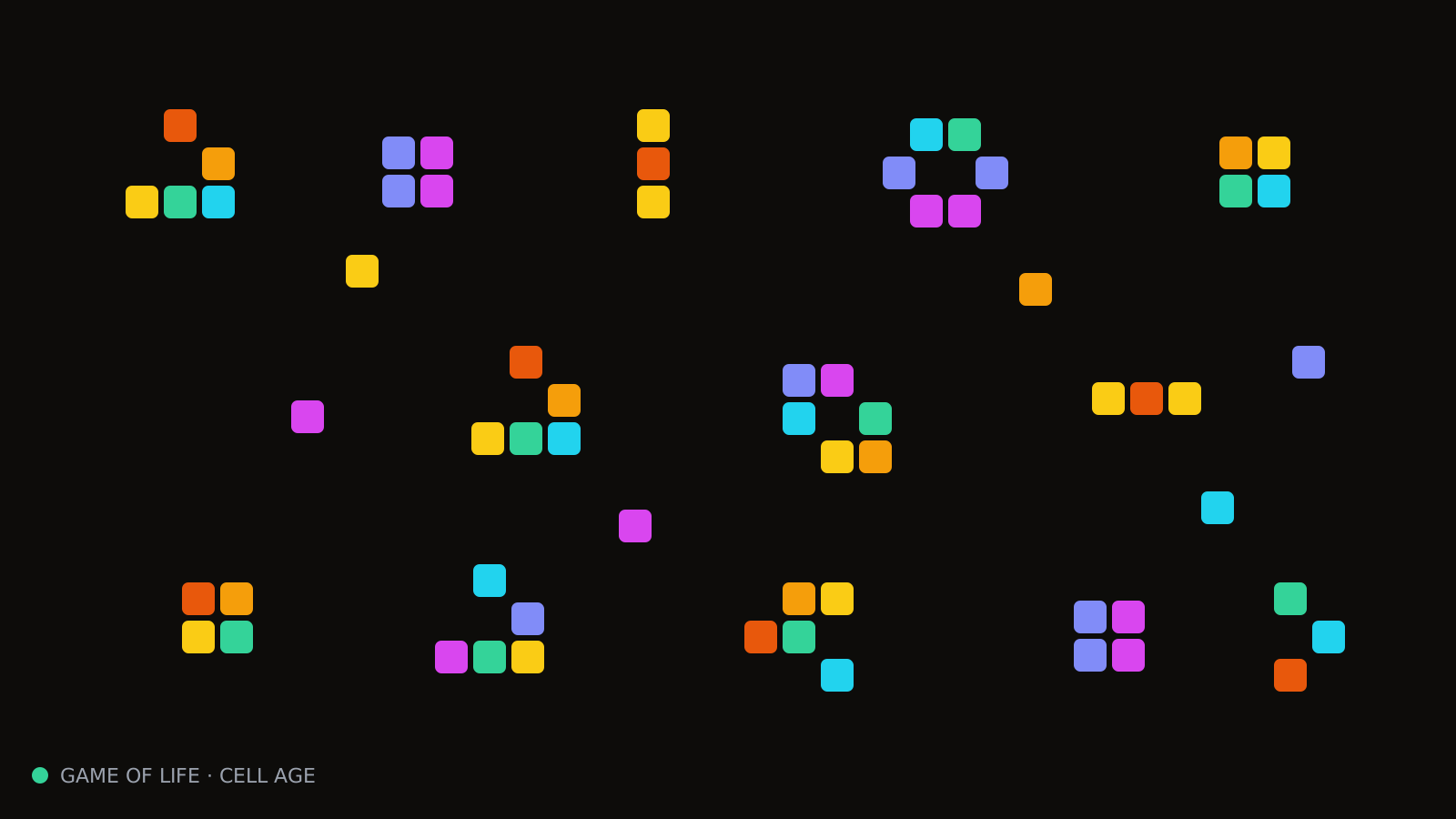 ▶ REPLAY
 Game of Life
Conway's automaton as a perfectly observable, deterministic grid world.
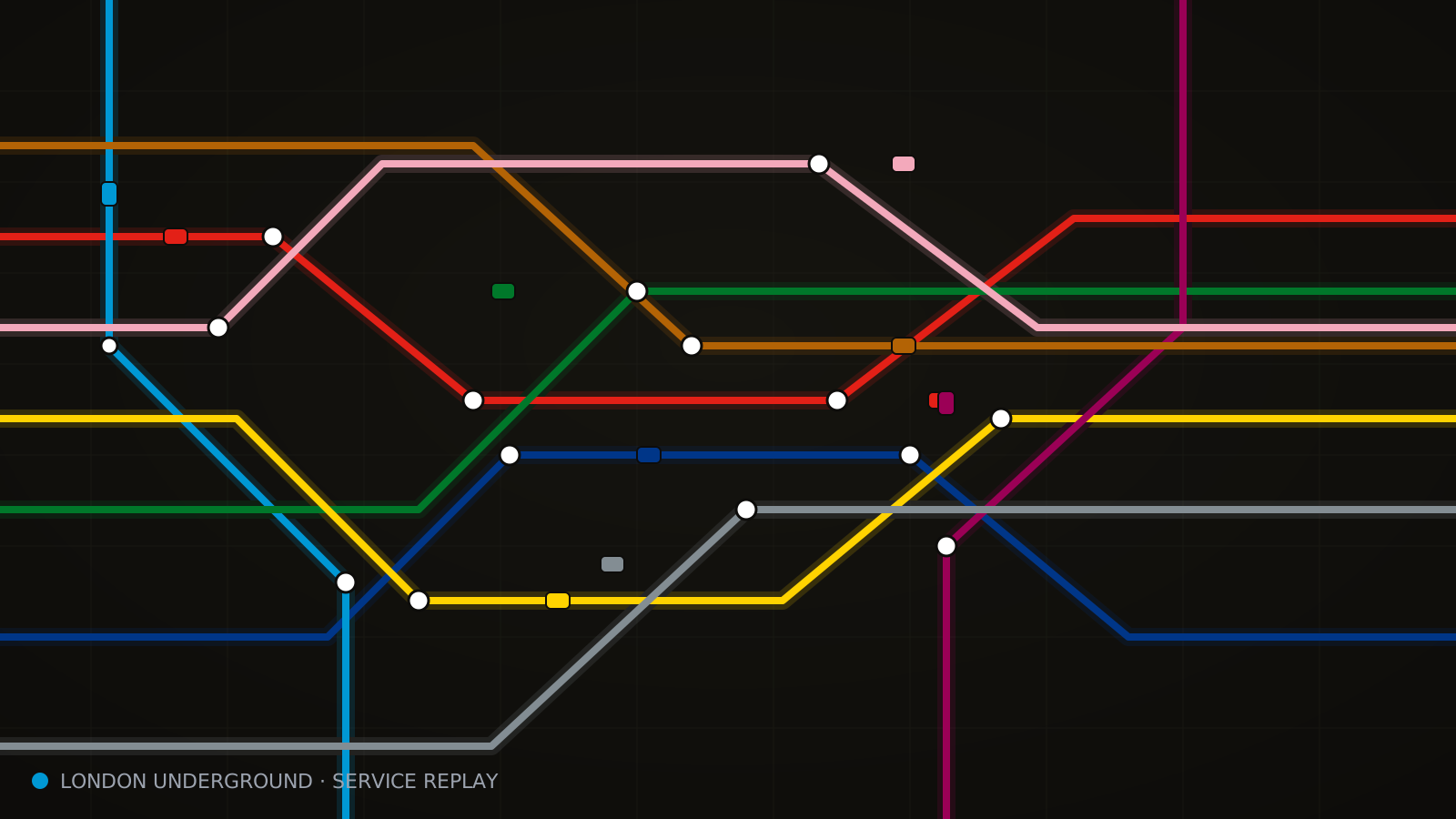 ▶ REPLAY
 London Underground
A live tube graph — eleven lines, hundreds of trains, platforms held as a mutex.
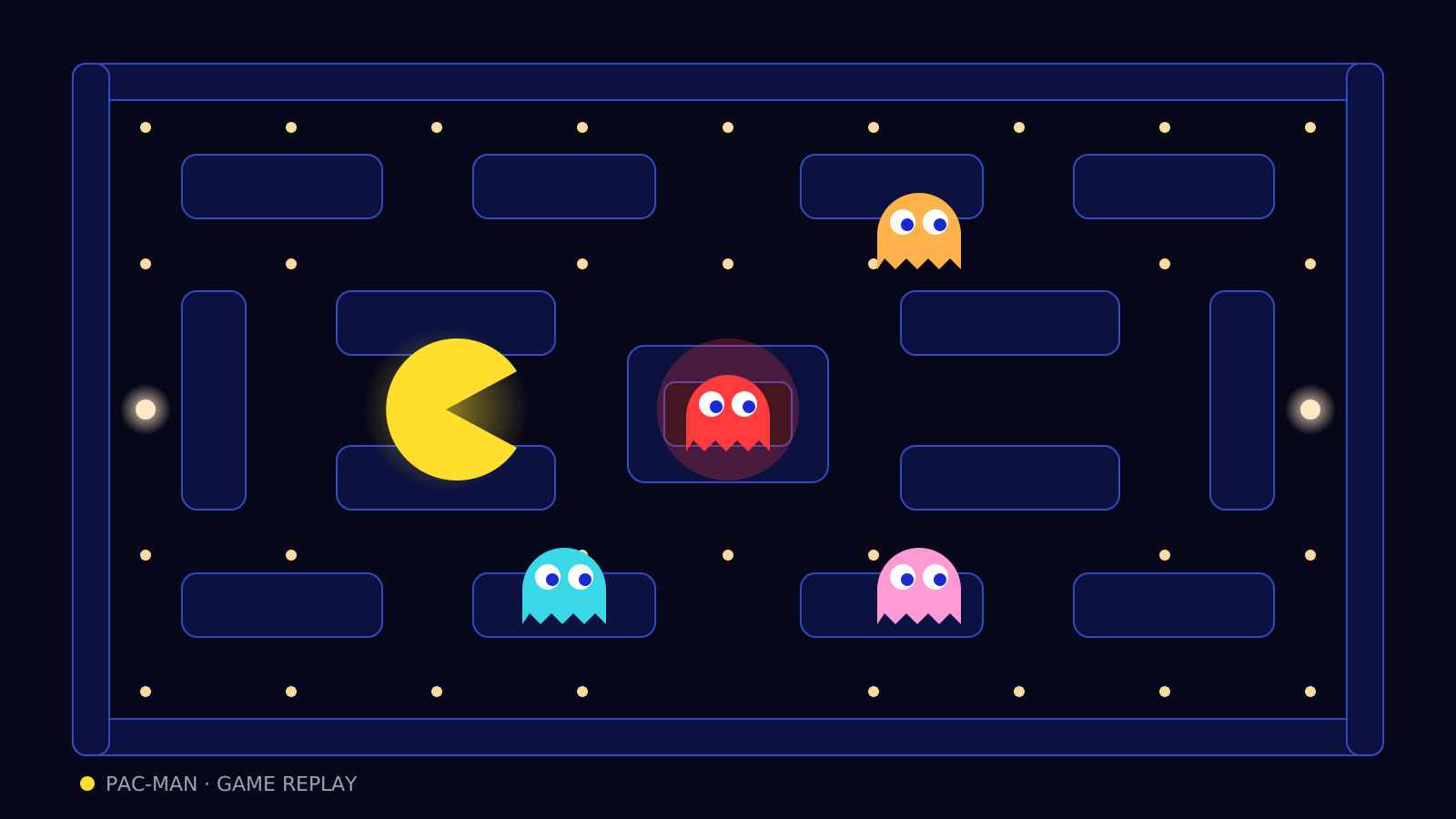 ▶ REPLAY
 Pac-Man
A self-playing arcade game — ghosts chase a flood-filled distance field.