Manufacturing Line
A machine shop's order book — staggered releases, hour-by-hour production, spawned quality inspections, and rework/MRB loops.
A discrete-manufacturing order book from release to disposition. Forty seeded work orders carry five references wired straight from seed cells — the product plus four BOM-line components with per-line quantities. Each order waits in queued (release gated by priority: rush 0.04/h vs standard 0.01/h), runs an Age-keyed production cycle, and spawns a QualityCheck on reaching quality_check. The inspection inherits the order's line, samples its verdict, logs defects hour by hour, measures bore and surface finish from verdict-keyed normals against the drawing spec, then messages the order its disposition with the defect count as payload — pass completes, rework and fail loop through the rework state, where the order's own cumulative defect tally decides between a quick return to line and a slow MRB hold at four or more.
A quality ledger that reconciles by construction: an order's defects equal the sum over its inspections because the count only ever moves by message payload. First-pass yield, WIP census, verdict mix by line, and measurement drift all fall out of two tables — and the same data renders two flagship documents, a drawing-style Bill of Materials sheet whose component lines are cross-entity lookups resolved at generation time, and a stamped PASS/REWORK/FAIL inspection report whose measurements really sit in or out of tolerance.
Linked tables with guaranteed referential integrity.
Generated REST endpoints. Also exposed as MCP tools.
OSI-compatible definition, emitted with the dataset.
# manufacturing-line.osi.yaml — emitted automatically
semantic_model:
  name: "manufacturing-line"
  source: "duckdb://manufacturing-line.db"
  entities:
    - name: product
      primary_key: id
  dimensions:
    - name: state
      type: categorical
    - name: t
      type: time
  measures:
    - name: row_count
      agg: count
    - name: active
      agg: sum
      filter: "state = 'ACTIVE'"
More worlds.
 ▶ REPLAY
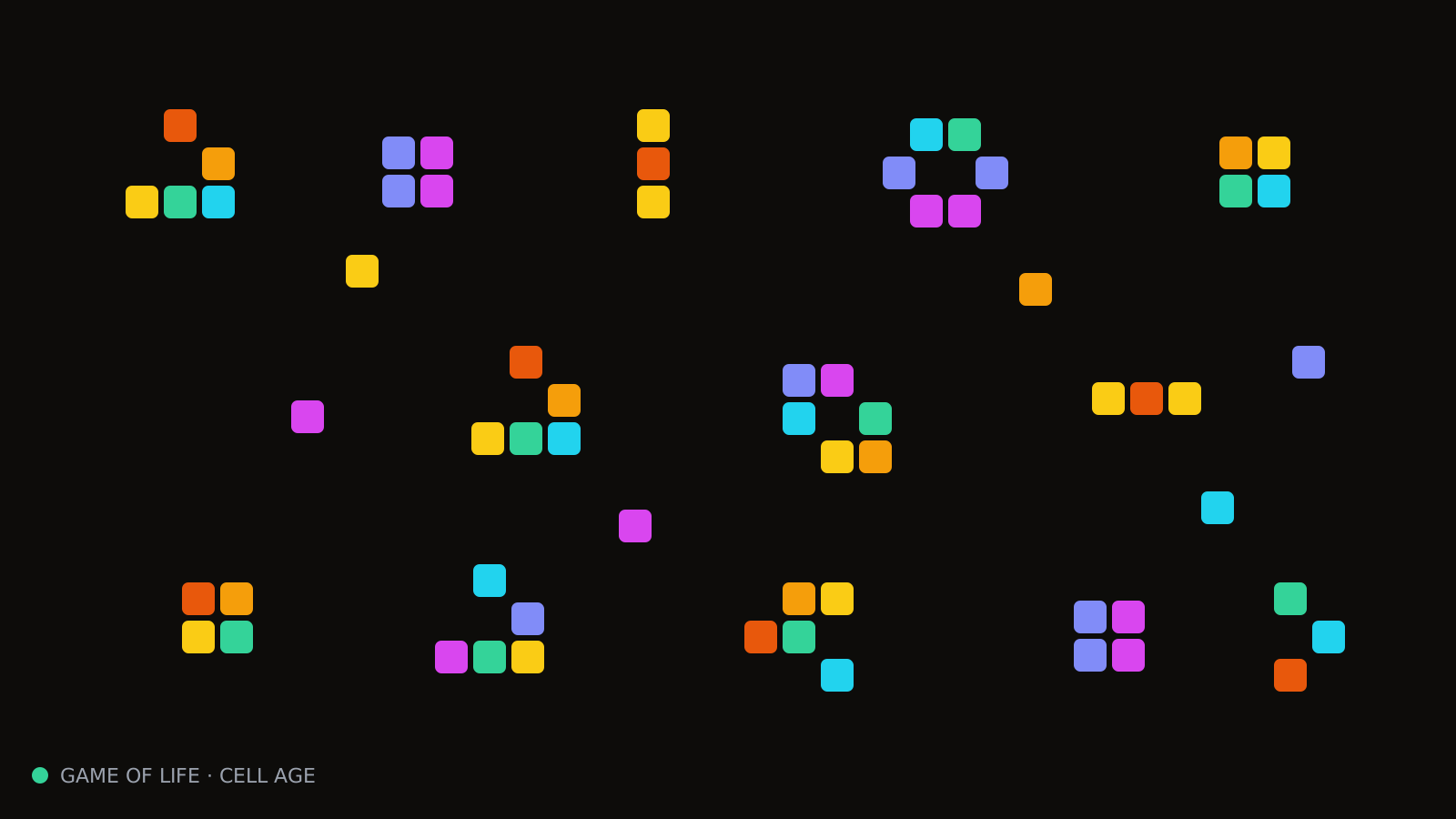
 Game of Life
Conway's automaton as a perfectly observable, deterministic grid world.
 ▶ REPLAY
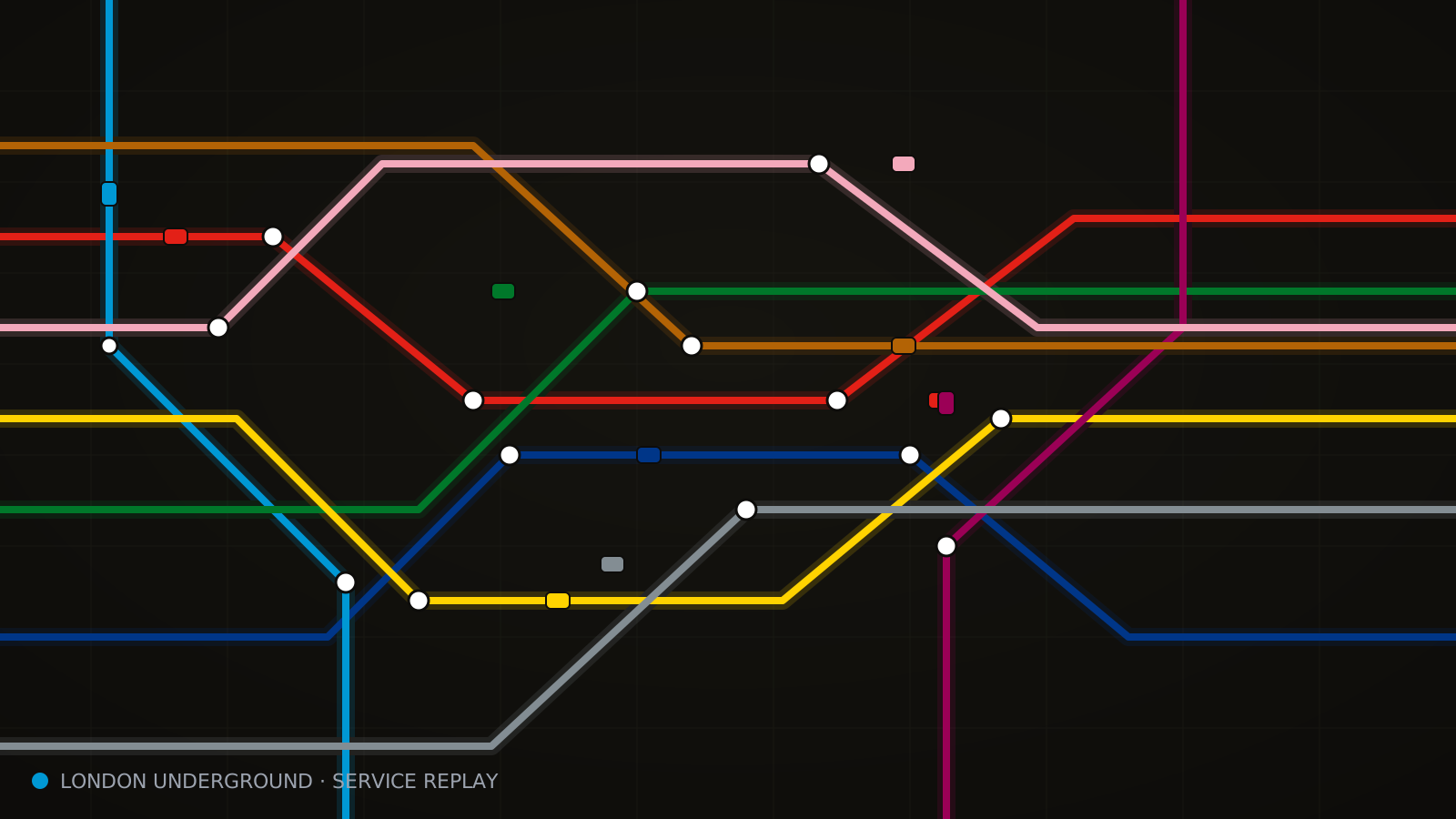
 London Underground
A live tube graph — eleven lines, hundreds of trains, platforms held as a mutex.
 ▶ REPLAY
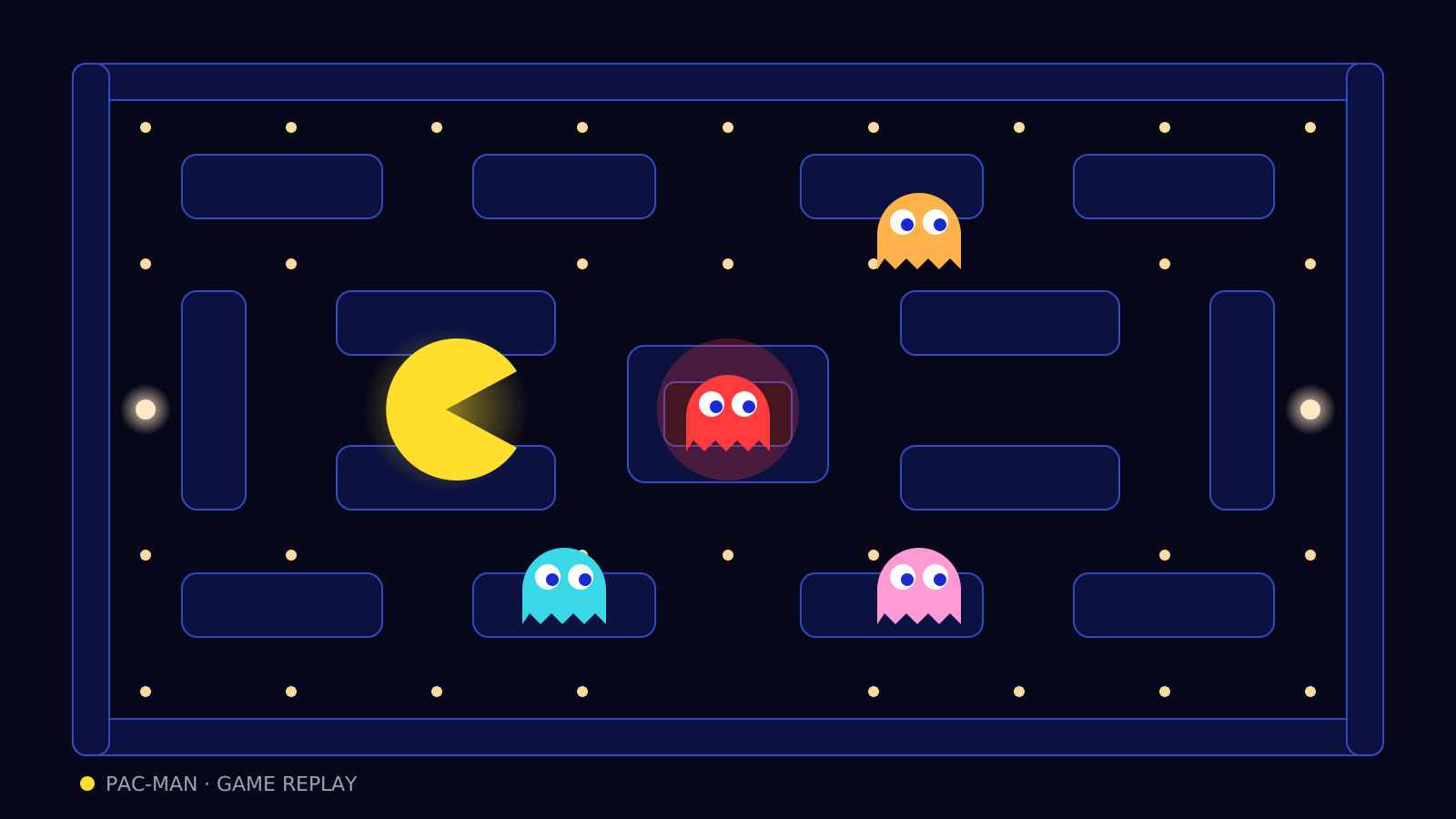
 Pac-Man
A self-playing arcade game — ghosts chase a flood-filled distance field.